
Amelie Neckles, Fourth Generation Holocaust Refugee
Before I started my work experience at the Association of Jewish Refugees (AJR), I knew the Holocaust was part of my family’s history. But spending today learning more about survivors’ stories has made me realise just how closely that history connects to my own life.
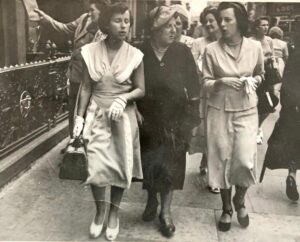
I’m nearly 15 years old—the exact same age my great-grandmother, Miriam Katz, was when she arrived in London after escaping Nazi Germany. While I’m spending today gaining experience, learning new skills, and thinking about my future, she was forced to leave behind everything she knew to find safety in a country she had never called home. It’s impossible not to wonder how frightened she must have felt, and how much courage it took to start again.
My great-grandmother travelled to Britain with the remarkable educator Anna Essinger and became a pupil at Bunce Court School, a place that offered refuge, safety and the chance to begin again for children fleeing Nazi persecution. During my work experience, it felt especially meaningful to learn that the AJR has commemorated this extraordinary chapter of history with a plaque at Bunce Court. Seeing how those stories continue to be remembered made me realise that my great-grandmother’s journey is not just part of my family’s history—it is part of a much bigger story that deserves to be told.
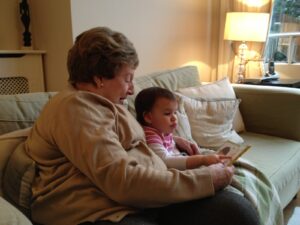 As a fourth-generation descendant of a Holocaust refugee, I have grown up hearing about my family’s journey. But being at the AJR has helped me understand that these aren’t just stories from the past—they’re living memories that continue to shape families like mine today.
In this blog, I want to reflect on what I’ve learned during my work experience, what it means to carry my great-grandmother’s legacy, and why remembering the Holocaust is so important. Her story is one of survival, resilience, and hope, and knowing that I am the same age she was when her new life in Britain began has made that legacy feel more real than ever.
Carrying my great-grandmother’s legacy means much more than simply knowing my family history. It means understanding that the opportunities I have today exist because of the courage she showed when she was only 15 years old. At my age, she wasn’t thinking about school, hobbies, or work experience—she was escaping Nazi Germany and beginning a new life in Britain. Knowing that we are the same age makes her story feel incredibly real to me.
Her resilience inspires me every day. Despite everything she lost, she chose hope over fear and rebuilt her life. Because of her strength, generations of my family have been able to grow up in safety and freedom. I know that I wouldn’t be here without the brave decisions she made.
Being on work experience at the AJR has made me appreciate her legacy even more. Every story I have read and every person I have learned about reminds me that behind every survivor is a family whose future depended on extraordinary courage. I feel a responsibility to make sure my great-grandmother’s story is never forgotten and to help others understand why remembering the Holocaust still matters today.
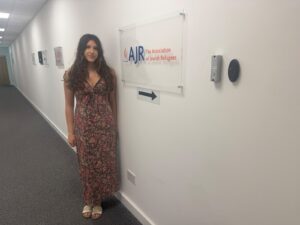 For me, carrying her legacy also means living by the values she passed down through our family: kindness, strength, compassion—and, of course, a slice or two of apple strudel! I can’t change what happened in the past, but I can help keep her memory alive by sharing her story and making sure future generations continue to learn from it. That is the greatest way I can honour everything she endured and everything she overcame.
Amelie Neckles
Fourth Generation, Holocaust Refugee