AJR study reveals significant reach of Holocaust education as sector confronts rising antisemitism, AI, the loss of the survivor generation and funding pressures
Huddersfield, 8 October 2026: More than 123,000 people have been reached by Holocaust education and remembrance projects funded by the Association of Jewish Refugees (AJR) since 2023, according to a major review unveiled at a gathering of leading sector organisations.
The landmark report, ‘What’s Next for Holocaust Education, Research and Remembrance in the UK?’, describes a well-established, diverse sector with considerable expertise and sustained public interest, but calls for greater coordination, collaboration and consistent measurement to demonstrate collective impact amid rising antisemitism, misinformation and AI, the loss of the survivor generation, funding pressures and unequal access to Holocaust education.
Commissioned by the AJR, the UK’s leading dedicated funder of Holocaust education, Ben Barkow CBE, former Director of the Wiener Holocaust Library, and independent education consultant Clementine Smith compiled the first-of-its-kind report. It draws on fifty expert interviews representing more than twenty-five organisations, analysis of AJR-funded projects, a cross-sector focus group and a practitioner survey.
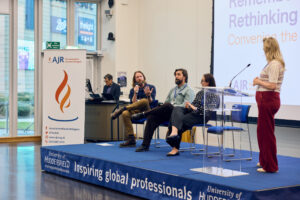
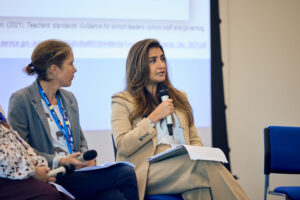
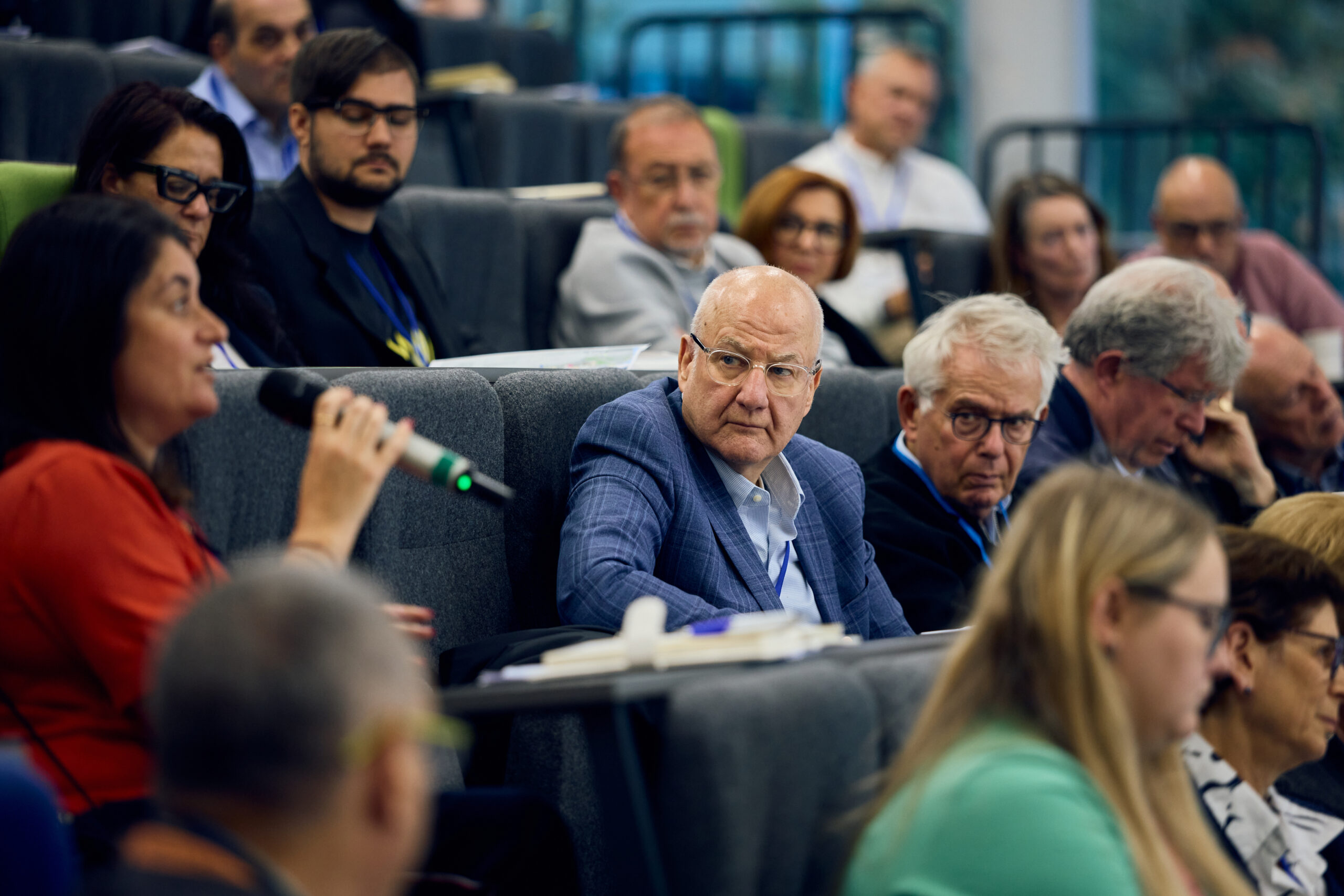
The findings were unveiled at Remembering & Rethinking 2026: Convening the Sector – AJR’s two-day forum at Holocaust Centre North, University of Huddersfield, where figures from Holocaust education, academia, government, and the wider remembrance sector considered how to turn them into action.
In a message to the conference, Prime Minister Andy Burnham praised AJR’s leadership in bringing the sector together at a critical time for Holocaust education and remembrance. He said:
“I am grateful to the Association of Jewish Refugees and its partners for bringing together such a distinguished gathering to share expertise and consider the challenges facing Holocaust education and remembrance today.”
The Prime Minister also emphasised the importance of preserving survivor testimony, safeguarding Holocaust memory and combating prejudice for future generations.
The report examines teaching after 7 October, geographical ‘cold spots’, innovation, links between academic research and classroom practice, and government’s role in promoting Holocaust memory. Contributors included academics, educators, AJR and other UK Holocaust education specialists, Huddersfield MP Harpreet Uppal, and Sally Sealey, Head of Secretariat at the UK Holocaust Memorial Foundation.
It identifies opportunities to reduce duplication, share knowledge and resources, and set clearer collective priorities.
Alex Maws, Head of Education and Heritage, AJR said:
“The question is no longer whether good Holocaust education is taking place – this report shows emphatically that it is. The challenge is how, as a sector, we can demonstrate the difference it makes and ensure that expertise and resources reach the places its needed most. At a time of rising antisemitism, rapidly changing technology, and the dwindling of the survivor generation, we cannot afford to work in silos. As the UK’s leading dedicated funder of Holocaust education, AJR wants to bring organisations together, share what works and build a stronger evidence base for the sector. This is not about telling individual organisations how to work but identifying where cooperation can make us stronger and increase the impact of Holocaust education across the UK.”
The review finds that AJR’s Educational Grants Programme supports valuable initiatives and attracts consistently positive participant feedback, but that results and impact is measured and reported inconsistently. A more consistent approach to monitoring, evaluation and learning would help organisations identify effective practice, demonstrate results, and share successful approaches.
Recommendations include mapping Holocaust education across Britain to identify geographical ‘cold spots’; developing shared measures of reach and impact; providing monitoring and evaluation support to AJR grantees; publishing an annual cross-sector insight report; and continuing dialogue between Holocaust organisations and academics on shared priorities and emerging challenges.
Ben Barkow CBE, co-author of the report, said:
“The UK has developed an impressive and diverse landscape of Holocaust education, research and remembrance. But the challenges facing it are changing rapidly. Greater cooperation offers an opportunity to reduce duplication, make limited resources work harder and develop shared priorities while retaining the distinctive expertise and independence of individual organisations.”
The report also identifies inequalities in access to high-quality Holocaust education. Anecdotal evidence suggests that remote, rural, and coastal communities may have poorer provision, although further work is needed to establish the extent and causes. AJR proposes cross-sector research to map current reach, identify gaps and guide future resources.
A second research strand, led by Clementine Smith, reviewed applications and reports from more than thirty AJR-funded projects delivered by over twenty-five organisations. It found strong engagement and positive results, while highlighting the need for more consistent definitions and measurement of objectives, outcomes, and impact.
Clementine Smith, co-author of the report, said:
“The scale of activity and engagement demonstrated through AJR-funded programmes is hugely encouraging. The opportunity now is to build on that strength by becoming clearer about the changes we want our work to achieve and more consistent about how we measure them. Better evaluation is not about creating additional bureaucracy. It gives organisations stronger evidence of what works, helps funders make better-informed decisions and enables the sector to tell a much more powerful story about its impact.”
Designed to move from discussion to practical collaboration, Remembering & Rethinking 2026 included Barkow and Smith’s co-design workshop, “Turning insight into action”, alongside workshops and peer presentations on joint working and next steps.
The report concludes that the sector can become more connected and better demonstrate its impact by sharing data, insight, and good practice. AJR will use its UK-wide relationships and position as a funder to convene partners, encourage collaboration, and turn the recommendations into action.