The AJR’s Michael Newman and Alex Maws, longtime members of the UK’s delegation, share reflections on the IHRA’s first ever meetings in South America.
“When Hitler rose to power in 1933, we did not have strong leaders like President Trump… who were ready to confront this evil head-on.” So claimed the U.S. special envoy to monitor and combat antisemitism, Yehuda Kaploun, at a meeting of the International Holocaust Remembrance Alliance (IHRA) in Buenos Aires, Argentina.
On the one hand, it’s an objectively preposterous statement – the suggestion that President Trump would have prevented the Holocaust – albeit one that sounds like it just may have been dictated from the president himself. On the other hand, it demonstrates the challenges associated with the work of Holocaust remembrance in 2026.
That the special envoy’s speech was delivered 48 hours before American voters issued an historic and comprehensive rejection of Trumpism reminds us that governments change and so too do their approach to Holocaust remembrance. Countries join the IHRA by affirming their commitment to the principles of the Stockholm Declaration, but what then happens when their national priorities change? The roller-coaster of US policy in recent years is not unique. In recent years, the IHRA has had to adapt to regime changes several times, including occasions when longtime trusted partner governments have been supplanted by ones whose agendas seemed at odds with the commitments made by their predecessors.
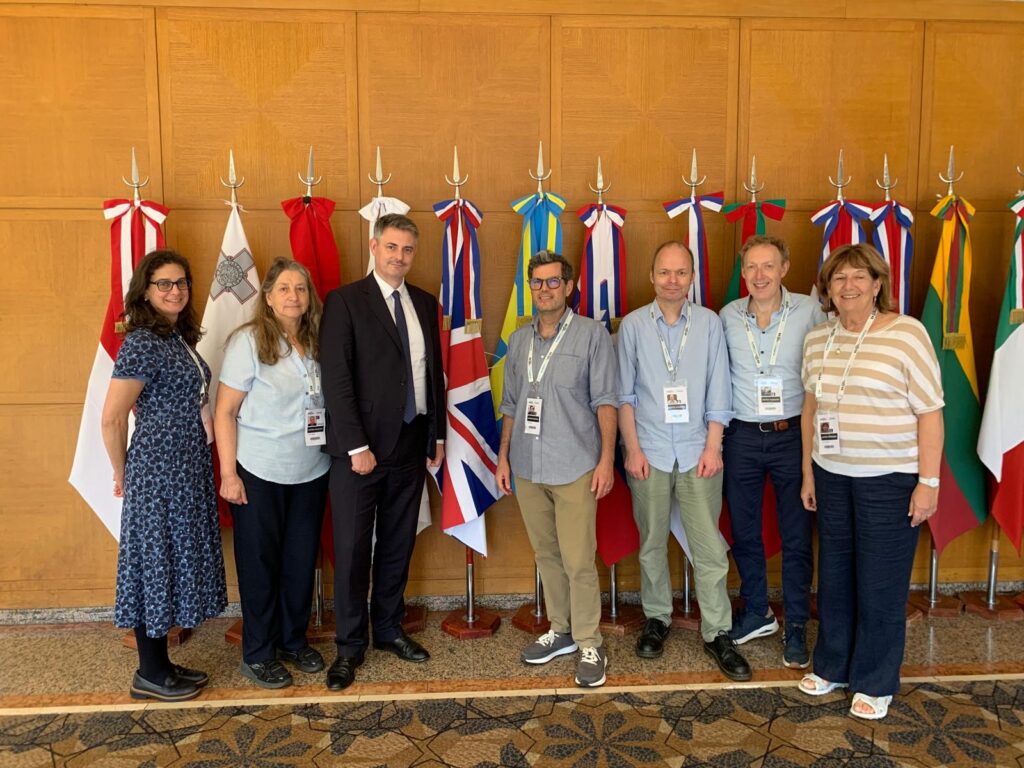
It was notable that the 2026 Argentine presidency of the IHRA marked the first time that the organisation was chaired and hosted by a South American country. Like all past IHRA presidencies, Argentina sought to put their national stamp on our week of meetings. The theme for the Argentinian Presidency was ‘Expanding the frontiers of remembrance’, which was exemplified by Paraguay submitted its candidacy for membership and Peru adopting the IHRA working definition of antisemitism (WDAS).
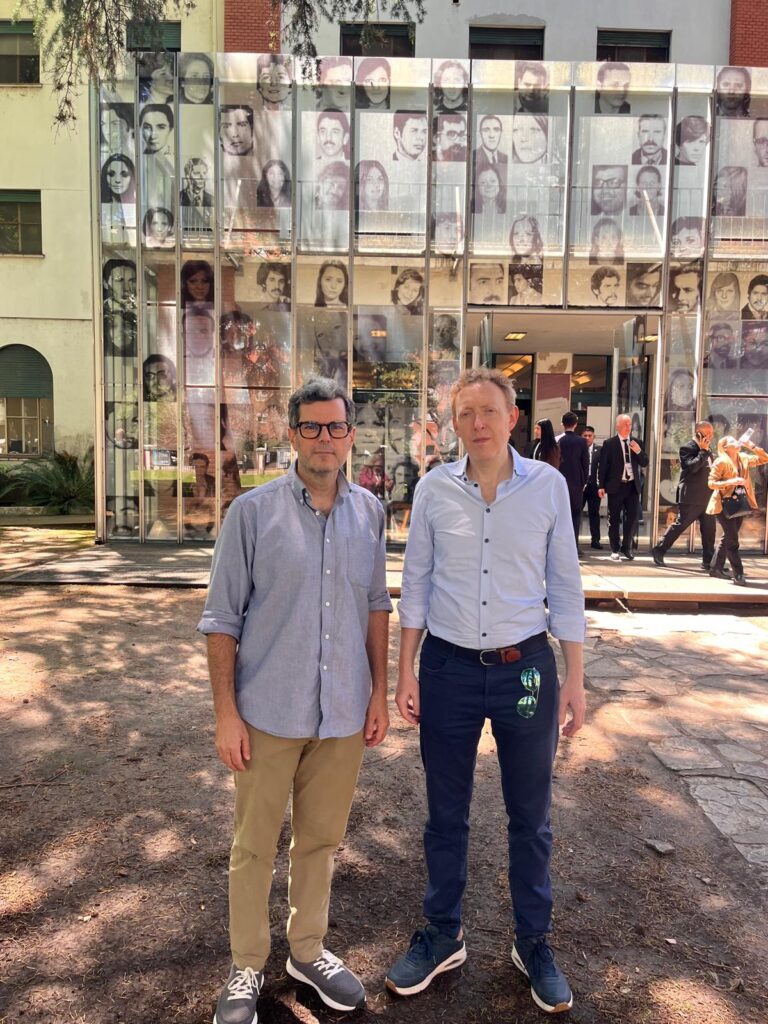
One particular day featured a whirlwind tour of three different sites in Buenos Aires. First, IHRA delegates visited the ESMA museum and memorial site, where the former dictatorship detained and tortured it political opponents. The visit revealed that what “relevance” means in one national context is not the same as in another. From an educational perspective, pedagogical concerns when visiting a site such as ESMA are very similar to visiting Holocaust sites. Beyond that, we learned that although Jews made up less than one percent of the Argentine population in the 1970s, they comprised eight percent of the victims of state-sponsored torture and murder. There were occasions when their captors taunted them by playing speeches by Adolf Hitler. You don’t need to over think the connection to the Holocaust when the perpetrators themselves proudly acknowledged that they were inspired by Nazism.
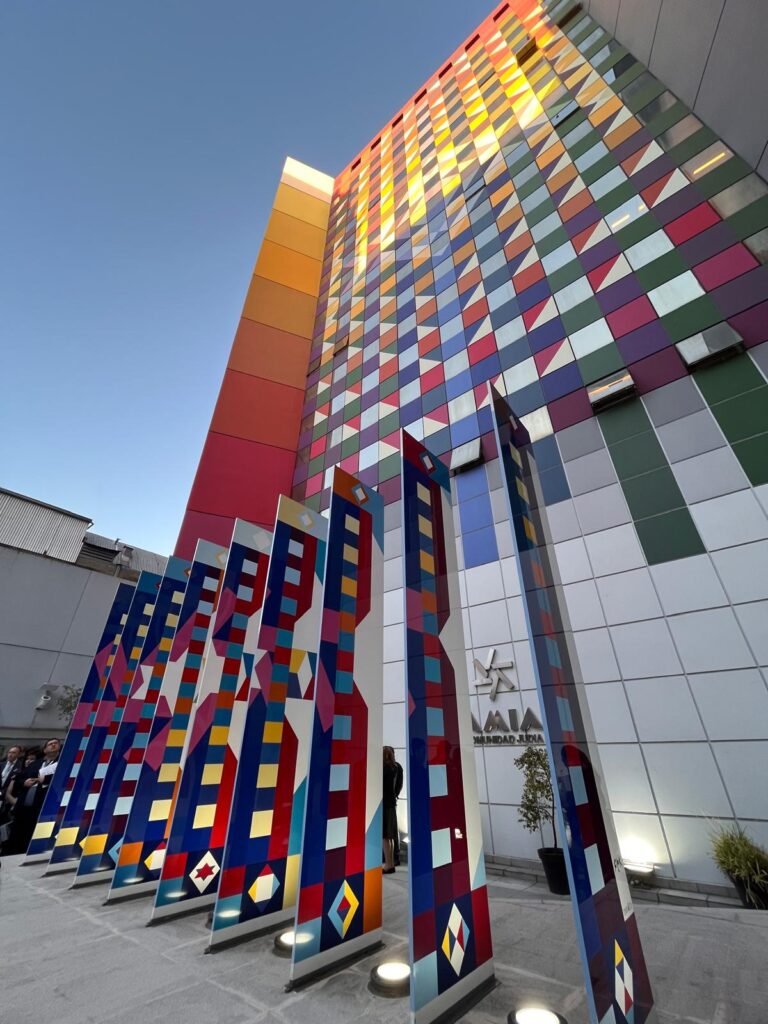
Next, delegates visited Libertad Temple, home to the oldest Jewish community in Argentina – an important reminder that all Holocaust remembrance needs to be contextualised in Jewish life before and after the Shoah. Yet, our next stop, at the AMIA/DAIA cultural centre, highlighted that threats to Jewish life did not end with the liberation of Nazi camps. In 1994, this site was bombed by suspected Hezbollah terrorists, killing 85 people – the largest anti-Jewish attack outside of Israel since the Holocaust and Argentina’s largest terrorist attack ever.
The work of the IHRA famously (perhaps too famously) extends to fighting contemporary antisemitism and Holocaust denial, and this head-spinning day of site visits points to why the Holocaust itself cannot be easily delineated and sectioned off from the wider world before, during and after. We want people to make historically-informed connections between the Holocaust and other related issues, while also establishing some boundaries to ensure that these connections don’t encourage the misuse of Holocaust memory.
Nonetheless, delegates from the Committee on Antisemitism and Holocaust Denial spent time working to draft an explainer on the phenomenon of Holocaust inversion, which we hope will be adopted next year by the IHRA’s 35 member countries. This particularly pernicious form of Holocaust distortion and antisemitism reverses the roles of victims and perpetrators and to re-apportion responsibility for the genocide of the Jews, fundamentally distorting understanding of the Holocaust and falsifying the history of the Holocaust.
And all of this was taking place amid intense debates about the role of AI in Holocaust remembrance – a signature theme of the Argentine presidency year. Of course, AI presents some powerful opportunities for our field, as it does for many others. But we have also seen in the past, almost every new form of technology brings with it new forms of Holocaust distortion and antisemitism.
These are serious challenges, especially as we move ever closer in the field of Holocaust remembrance to the post-eyewitness era. International cooperation, which is the entire purpose of the work of the IHRA, can be messy and flawed, but it is essential. There is really no alternative. The AJR considers it to be an important part of our future as well. We have been central to the work of the IHRA for nearly 20 years, and moving forward we will continue to help serve as the voice of the UK Holocaust remembrance field internationally, and also to bring the collective expertise of the international Holocaust remembrance field back to the UK.
Co-written by Michael Newman and Alex Maws