
Writing family history is both a privilege and a responsibility. For many AJR members, years of research, family conversations and archival discoveries eventually lead to the same question: how do you turn all that information into a story that future generations will want to read?
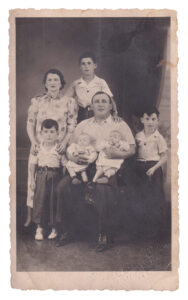 The most accessible way to preserve your family history is to write it down. After all, you may have spent countless hours researching your family’s past: talking to relatives, visiting places connected to your family’s story and searching through archives for documents, photographs and records. At some point, the challenge becomes bringing all those pieces together into something meaningful that can be shared with future generations.
Before you begin, there are a number of decisions to make. Are you writing a book and, if so, what form will it take? A memoir? A family history? A factual novel? Or perhaps you would prefer to create a collection of documents, photographs and testimonies. Will you focus on one individual or follow several generations of a family? Will you write in the first person or the third person? And then there are the practical considerations: fact-checking, editing, proofreading, printing and publishing. After investing so much time in writing, you’ll want people to read and engage with your work.
My own writing journey began after my mother died. I wanted to record the little I knew about her childhood in Nazi-occupied France and those of her two older brothers who also survived the Holocaust. Like many second-generation descendants, my sister, my cousins and I wanted to understand more about our parents’ experiences.
Because the three siblings were separated during the war, I started by creating a timeline for each of them and then gradually filled in the gaps with information gathered through research. As their stories emerged, I realised how extraordinary their experiences of survival had been. I knew I wanted to tell their story as a factual novel, making it accessible not only to adults but also to younger readers.
It took around five years to complete, largely because I was writing in evenings and at weekends while working full-time. Looking back, I could probably have finished it more quickly, but writing about such an emotional subject requires space, reflection and, importantly, time for self-care.
There will always be reasons to postpone writing. A lack of confidence, uncertainty about where to start or simply the feeling that more research is needed can all become obstacles. One of the best ways to overcome that hesitation is to join a writing course that provides structure, encouragement and a community of fellow writers.
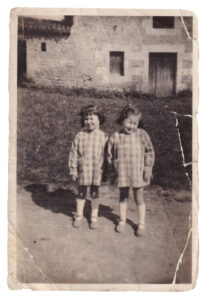
The AJR is delighted to offer a six-week online Writing Family History course led by author and family historian Nick Barlay. This will be the third time Nick has delivered the programme for AJR members, following the well-received session he led during our 85th Anniversary Weekend in June.
The course will be a practical exploration of how to write family history, with particular attention to the issues often faced by second-generation writers. Through examples, discussion and short writing exercises, participants will explore different approaches and discover the form most appropriate for their own unique story.
The course will address the emotionally and psychologically challenging questions that arise when writing about family history: what is known, what remains uncertain, how stories are passed on across generations and how we represent both the living and the dead. Participants will have opportunities throughout to share ideas, experiment with different styles and receive constructive feedback on their work.
Click here for full course details, dates and price.
Whether you are only just beginning to think about writing your family’s story or have already gathered years of research, this course offers a valuable opportunity to finally start putting those stories on the page. After all, every family history deserves to be told.
Debra Barnes
Head of Next Generations, AJR
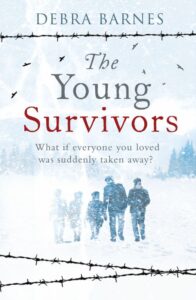
Debra Barnes managed the AJR My Story project, resulting in 45 individual life-story books for Holocaust refugees and survivors. Debra’s factual novel, The Young Survivors, is available from Amazon, libraries and all good book retailers.